Temple Hall
Bell Tower
Sound note: a subwoofer gives the bell a fuller sound. Ordinary laptop speakers lack deep bass, so the recording may sound thin.
Location and design
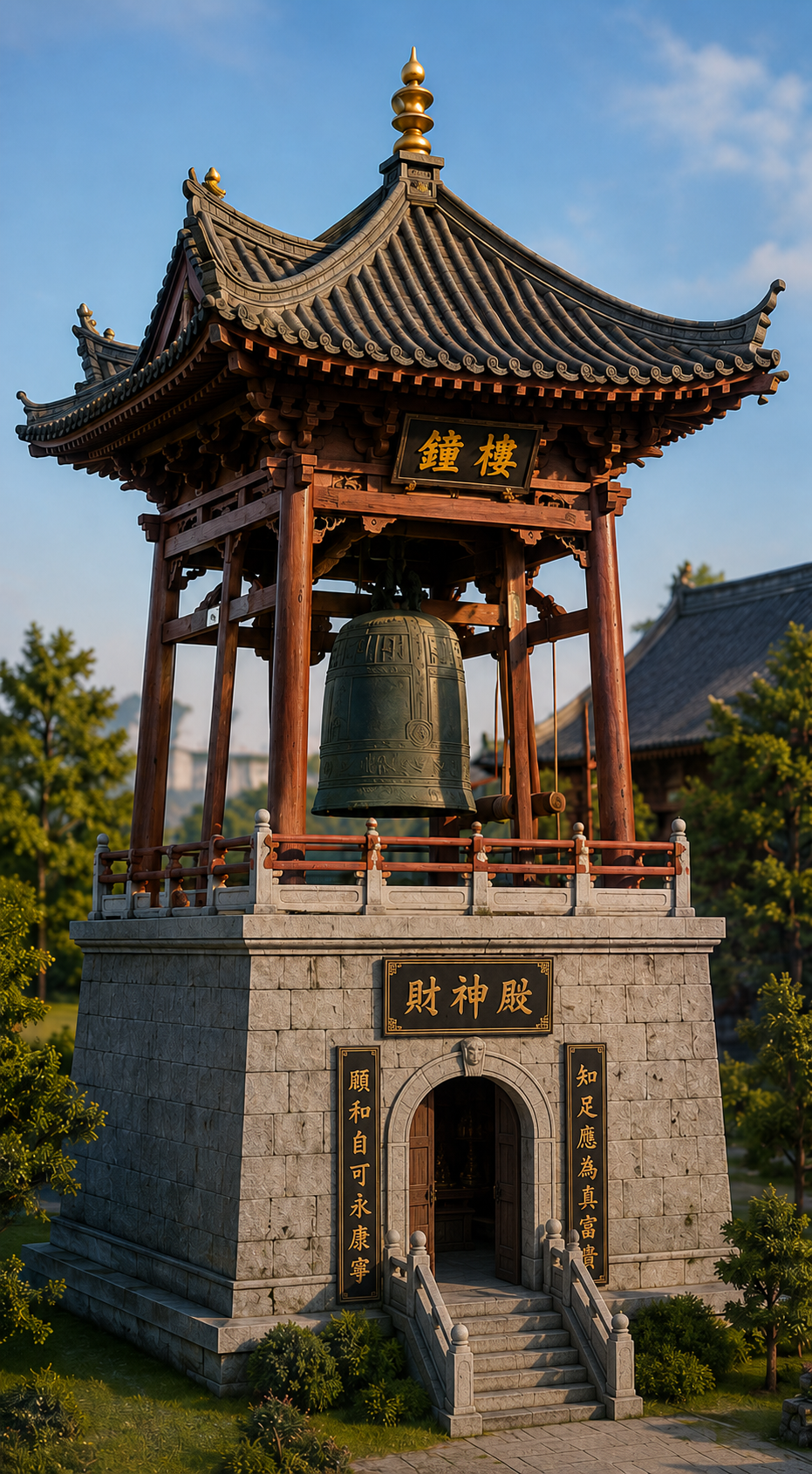
In Chinese temples, the Bell Tower usually stands east of the Hall of the Heavenly Kings, on the left as you enter. It faces the Drum Tower on the west. These matching side buildings are a familiar part of the temple layout. The Bell Tower is often a two-storey timber building with upturned eaves, grey bricks and tiles, a firm base and open windows around the bell above.
The lower floor may contain a shrine. The upper floor is open, with a large bronze bell hanging in the centre and a wooden striking beam beside it. Its size depends on the temple. Bells in older monasteries can weigh thousands of jin, and their deep sound can travel several li.
What the bell represents
Waking from confusion: Greed, anger and ignorance can hold us like a long sleep. The bell calls us to wake up, loosen our attachments and begin to practise. A familiar verse says, “Hearing the bell, may afflictions ease, wisdom grow and awakening arise.”
Dispelling darkness: In Buddhist belief, the sound can reach the ten Dharma realms, from the heavens to the underworld, helping beings in the six realms find relief from suffering.
The wish for awakening: Its full, lasting sound represents a broad and enduring wish to awaken for the sake of others. The continuing note suggests compassion that does not stop.
When the bell is rung
Morning and evening: The daily rhythm of bell and drum has guided temple life for centuries. The morning bell calls monks to rise for early practice and gather their attention. The evening bell helps them put down the day's distractions and settle into evening practice.
Blessing and memorial services: At Water and Land ceremonies, services for the deceased and prayers for blessings, the bell is rung at length to support the departed and wish relief and well-being for the living.
A reminder to reflect: Hearing it, practitioners examine their actions, speech and thoughts, restrain greed and anger, and renew their mindfulness.
In Chinese culture
Traditional belief holds that hearing a temple bell can lessen past harmful karma. Poets have long used its sound to evoke the quiet and distance of a monastery. It has become one of the recognisable sounds of Chinese Buddhist life.
A verse from the Rules of Conduct for Novices
On hearing the bell, join your palms and silently recite:
“Hearing the bell, may afflictions ease;May wisdom grow and awakening arise.May I leave hell and escape the pit of fire;May I become a Buddha and help all beings.Om, Jialadiye, Suoha.” (Chinese phonetic rendering.)